Understanding Proof-of-Stake (PoS). The Consensus Revolution Powering Modern Crypto in 2026
This article provides an exhaustive analysis of PoS, breaking down its complex technical layers and explaining its critical role in the contemporary cryptocurrency ecosystem.

The Fundamental Concept of Proof-of-Stake
The Core Logic of Staking vs. Mining
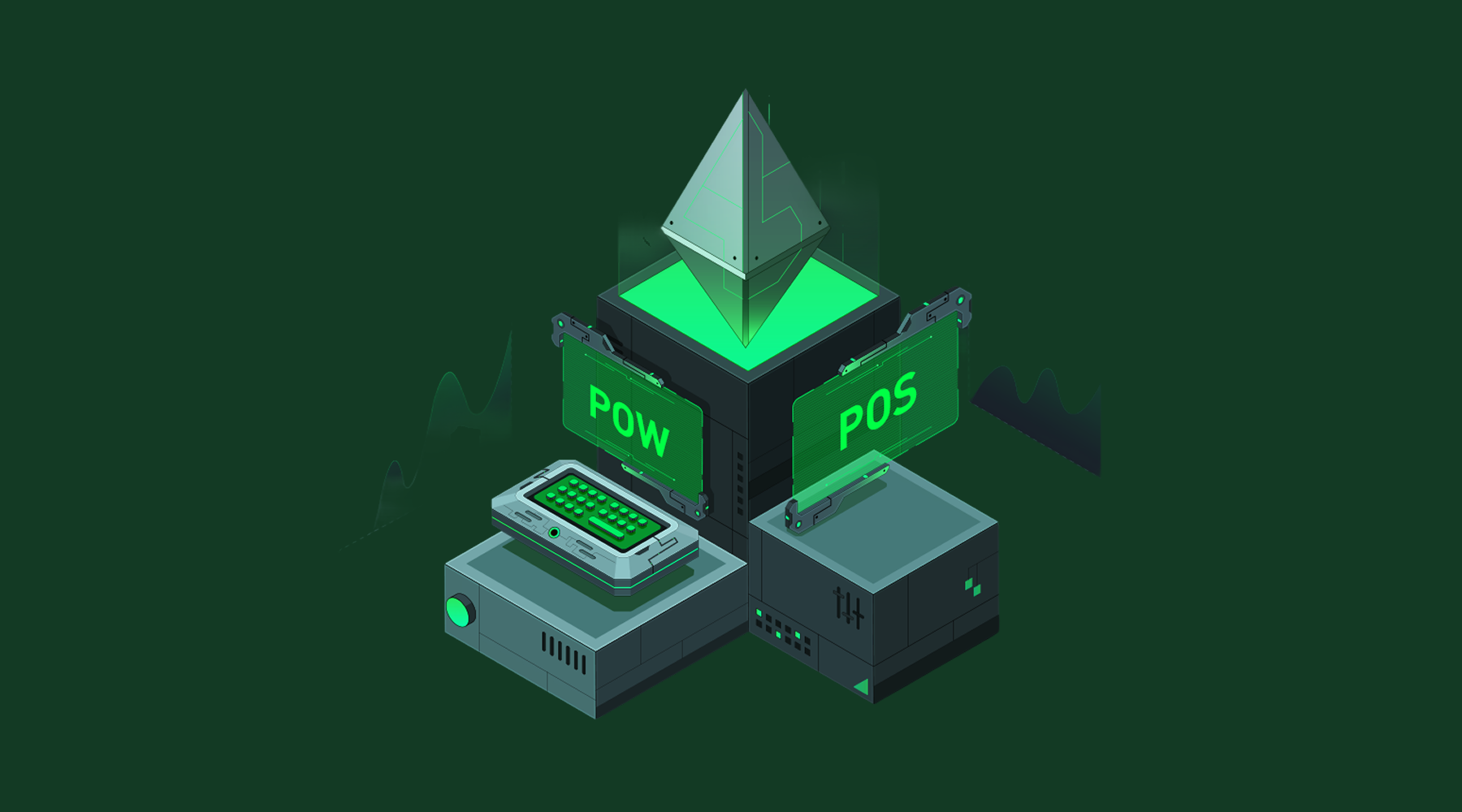
In a PoS system, the concept of "mining" is replaced by Validation. Instead of solving energy-intensive mathematical puzzles, the network selects participants to propose new blocks based on the size of their stake. This creates a direct incentive for participants to act in the best interest of the network; if the network remains secure and functional, the value of their staked tokens is preserved. Conversely, any malicious activity would directly devalue their own capital. This alignment of interests is the primary psychological and economic driver behind the success of networks like Ethereum, Cardano, and Solana.
The Transition from Resource-Heavy to Capital-Efficient Models
Historically, the crypto industry faced significant criticism regarding its environmental footprint. The transition to PoS allowed the ecosystem to shed the "energy-hungry" label, reducing total energy consumption by over 99%. This efficiency isn't just a win for the environment; it’s a win for Scalability. By removing the need for specialized hardware (ASICs), PoS lowers the barrier to entry for network participation, allowing for a more geographically and demographically distributed set of validators. This democratization of security is a key component of the decentralized ethos.
Why Consensus Mechanisms Matter for Investors
For a modern investor, understanding the consensus mechanism is equivalent to understanding the "operating system" of a financial network. A robust PoS protocol ensures that the ledger is immutable and that transactions are processed without the need for a central authority. The Proof-of-Stake model also introduces the concept of yield-bearing assets in the crypto space. Unlike Bitcoin, which is often viewed as "digital gold," PoS assets are more akin to "digital bonds" or productive capital, as they provide a continuous stream of rewards to those who help secure the network.
Technical Mechanics and Validator Selection
The Selection Algorithm: Randomness and Weight
To maintain decentralization, PoS protocols use various methods to select validators. The most common is a combination of Stake Weight and Verifiable Random Function (VRF).
Stake Weight: The probability of being chosen is directly proportional to the amount of tokens staked.
Randomization: VRFs ensure that the selection process cannot be predicted or influenced by outside parties, preventing attackers from knowing which node to target in advance.
Coin Age: Some older PoS iterations used "coin age" (the amount of time tokens have been held) to ensure that even smaller holders occasionally get a chance to validate, though this is less common in modern high-performance chains.
The Role of Attestations and Finality
In advanced PoS systems like Ethereum’s Beacon Chain, validators don’t just propose blocks; they also "attest" to them. An Attestation is essentially a vote that a particular block is valid. When a block receives enough attestations from a committee of validators, it reaches a state of Finality.
LMD GHOST: The fork-choice rule that helps the network decide which chain is the "real" one.
Casper the Friendly Finality Gadget (FFG): The mechanism that ensures once a block is finalized, it cannot be reverted without a significant portion of the total stake being destroyed. This concept of absolute finality is a massive improvement over the "probabilistic finality" of Proof-of-Work.
Hardware Requirements and Node Infrastructure
While PoS does not require a warehouse full of GPUs, it does require reliable infrastructure. A Validator Node must maintain high uptime and a stable internet connection. If a validator goes offline, they may face "inactivity leaks" or penalties. This requirement has led to the rise of Staking-as-a-Service (SaaS) providers and cloud-based node management, allowing users to delegate the technical work to professionals while retaining ownership of their private keys. This balance between technical performance and capital ownership is what allows PoS networks to handle thousands of transactions per second (TPS).
Economic Incentives, Yield, and Slashing
The Sources of Staking Rewards
Participants in a PoS network earn rewards through two primary channels: Protocol Inflation and Transaction Fees.
New Token Issuance: The protocol mints a predetermined amount of new tokens to reward validators for their service. This is the primary driver of APY (Annual Percentage Yield).
MEV (Maximal Extractable Value): In addition to standard fees, validators can sometimes earn extra revenue by strategically ordering transactions within a block, a process that has become a multi-billion dollar sub-industry within crypto.
The Concept of "Real Yield" in Staking
In the current market, sophisticated investors look beyond the nominal APY. They calculate the Real Yield, which is the staking reward minus the network's inflation rate. If a network has an 8% staking reward but a 5% inflation rate, the real yield is effectively 3%. This distinction is crucial for long-term sustainability. Protocols that burn a portion of transaction fees (like Ethereum's EIP-1559) can even become Deflationary, meaning the total supply decreases over time, theoretically increasing the value of each remaining token.
Slashing: The Ultimate Financial Deterrent
The most powerful tool in the PoS arsenal is Slashing. If a validator is caught trying to subvert the network—for example, by signing two different versions of the same block—a significant portion of their staked capital is permanently deleted by the protocol.
Soft Slashing (Penalties): Minor fines for being offline or missing attestations.
Hard Slashing: Massive losses for malicious acts or double-signing. This mechanism ensures that an attacker doesn't just lose time or electricity (as in PoW), but they lose the very asset they are trying to manipulate. It makes the "cost of attack" easily quantifiable and incredibly high.
Liquid Staking and Capital Efficiency
A major hurdle in early PoS was the "illiquidity" of staked assets. Once staked, tokens were locked and couldn't be used in DeFi. The invention of Liquid Staking Tokens (LSTs) solved this. When a user stakes through a provider like Lido or Rocket Pool, they receive a derivative token (e.g., stETH) that represents their stake. This token can be traded, used as collateral, or put into liquidity pools. This innovation has significantly increased the Capital Efficiency of the ecosystem, allowing users to earn staking rewards and DeFi yields simultaneously.

Security Models and Resistance to Attacks
The 51% Attack in a Stake-Based Environment
In a PoW network, a 51% attack requires controlling a majority of the hashing power. In PoS, an attacker would need to acquire 51% (or in many cases, 33% to stall and 67% to control) of the total staked supply.
Economic Barrier: Acquiring such a massive amount of tokens would drive the price up exponentially, making the attack prohibitively expensive.
Self-Destruction: If an attacker successfully compromises the network, the value of the tokens they just spent billions to acquire would likely plummet, resulting in a massive net loss for the attacker. This "mutually assured destruction" is a powerful deterrent that doesn't exist in the same way in PoW mining, where hardware can be repurposed to attack other chains.
Social Consensus and the Forking Defense
One of the most unique aspects of PoS is the role of Social Consensus. If a malicious entity somehow gains control of the majority of the stake, the honest minority of nodes and the broader community can choose to "fork" the network. In this new version of the chain, the attacker's stake can be manually slashed or ignored. This ability to "fire the majority" gives PoS networks a layer of defense that is social rather than purely algorithmic. It ensures that the community, not just the capital holders, has the final say in the network's direction.
Decentralization Metrics and Nakamoto Coefficient
Critics often argue that PoS leads to centralization because "the rich get richer." However, we measure this using the Nakamoto Coefficient—the minimum number of entities required to compromise the network. Many modern PoS chains have higher Nakamoto Coefficients than Bitcoin’s mining pools.
Anti-Correlation Penalties: Some protocols penalize validators who use the same infrastructure (like AWS), encouraging validators to diversify their hosting and software clients.
Client Diversity: Ensuring that not all validators run the same code prevents a single bug from taking down the entire network. Maintaining high levels of Client Diversity is a top priority for developers, as it ensures the network remains resilient even in the face of zero-day vulnerabilities.
Sybil Resistance and Identity
PoS serves as a robust Sybil Resistance mechanism. In a decentralized network, it’s easy to create thousands of "fake" identities (nodes). Without a cost-intensive barrier like staking, an attacker could overwhelm the network with these fake identities. By requiring a financial stake, PoS ensures that every "identity" has a verifiable cost associated with it, making Sybil attacks economically unfeasible.
Environmental Sustainability and Institutional Adoption
The ESG Advantage and Carbon Neutrality
The most immediate benefit of PoS is its Energy Efficiency. By eliminating the need for competitive computation, PoS networks use a fraction of the electricity required by PoW.
Low Carbon Footprint: This makes PoS-based assets eligible for "Green" investment portfolios.
Regulatory Alignment: Many jurisdictions are considering strict limits on high-energy mining. PoS networks are naturally immune to these specific regulatory pressures, providing a more stable long-term environment for developers. The narrative of "Green Crypto" has been a major factor in convincing traditional financial institutions to integrate blockchain technology into their existing systems.
Institutional Staking and the Rise of Custodial Solutions
Large-scale players like pension funds and hedge funds don't want to manage their own validator hardware. This has led to the development of Institutional-Grade Staking services. These providers offer insurance, multi-signature security, and legal compliance frameworks that make staking as easy as holding a traditional bank deposit. This influx of institutional capital has provided massive liquidity to PoS networks, further stabilizing the market and reducing volatility.
Regulatory Perspectives on Staking as a Service
One of the most complex areas of PoS is the regulatory classification of staking. In some jurisdictions, regulators have questioned whether staking rewards should be treated as securities.
The Howey Test: In the US, the debate centers on whether staking involves an "investment of money in a common enterprise with the expectation of profit."
Tax Implications: In many countries, staking rewards are taxed as income at the moment of receipt, requiring sophisticated tracking software.
The Future of "Useful" Stake
Looking beyond simple validation, some new protocols are experimenting with "Proof-of-Useful-Stake." This involves using the staked resources to perform actual computational tasks, like rendering graphics or training AI models, in addition to securing the blockchain. This evolution would turn a PoS network into a global, decentralized supercomputer, further increasing the value proposition for participants. This transition from "securing a ledger" to "providing a service" is where the most exciting marketing and development efforts are currently focused.
Conclusion: The Strategic Importance of PoS in 2026
Summary of the PoS Value Proposition
The transition to PoS has solved the most pressing issues that plagued early blockchain adoption. It has:
Reduced Energy Consumption: Making the technology sustainable for the long term.
Enhanced Scalability: Allowing for faster transactions and lower fees, which are essential for mass-market apps.
Created Productive Assets: Turning cryptocurrencies into yield-generating instruments that appeal to both retail and institutional investors.
Strengthened Economic Security: Making it prohibitively expensive for malicious actors to compromise the network.
The Road Ahead: Restaking and Modularity
As we look toward the future, the PoS model is continuing to evolve. Concepts like Restaking (using your stake to secure multiple services simultaneously) are pushing the boundaries of what is possible with capital-based security. Furthermore, the move toward Modular Blockchains means that PoS consensus can be separated from data availability and execution, allowing for even greater specialization and efficiency. These advancements will continue to drive the industry forward, making blockchain technology more invisible, yet more integral to our daily financial lives.
Final Thoughts for the Crypto Participant
Whether you are a casual observer or a serious investor, the impact of Proof-of-Stake cannot be ignored. It is the engine behind the world's most innovative decentralized applications and the key to the industry's social and environmental legitimacy. As the technology becomes more abstracted and easier to use, the underlying mechanics of staking will continue to provide the security and stability that a global financial system requires. The era of the "work-based" ledger is gradually giving way to the "stake-based" future, and those who understand these mechanics today will be best positioned to thrive in the decentralized economy of tomorrow.
Nedávné články