
Best Blockchain Wallet Development Services Guide
Learn how to choose blockchain wallet development services, compare wallet types, plan security, and assess leading crypto wallet development teams.

Understanding Blockchain Wallets
Blockchain wallets help users manage, send, and receive digital assets. They do not store coins like a bank account. They store keys that prove control of assets on a network.
A wallet signs each payment with a private key. It sends that signed request to the right network. The chain records the payment. The wallet then shows its status and balance.
The best blockchain wallet development services cover more than basic transfers. They shape sign-in, recovery, support, and payment history. Each step should feel clear to new and skilled users. Good design builds trust.
Wallet needs vary by business model. An exchange may need fast access and many assets. A savings app may need offline storage and strict approval rules. A payment app may need a simple cash-out path.
- Users can view balances across supported networks
- Users can send assets after checking the address and fee
- Users can receive assets through a clear wallet address
- Teams can track payments and handle support requests
Types of Blockchain Wallets
Blockchain wallet types differ by who controls the keys. That choice affects risk, speed, recovery, and support. It should guide the product plan from the start.
Custodial wallets keep keys with the provider. They can offer account recovery, fast trades, and help desk support. Users gain ease, but they trust the provider to protect funds.
Non-custodial wallets give key control to the user. A seed phrase or private key may unlock the account. Lost backup data can mean lost funds. Setup must teach safe storage in plain terms.
Multi-currency wallets support many assets and networks in one app. They can save time for users with varied holdings. Yet each added chain brings new fee rules, address forms, and code risks.
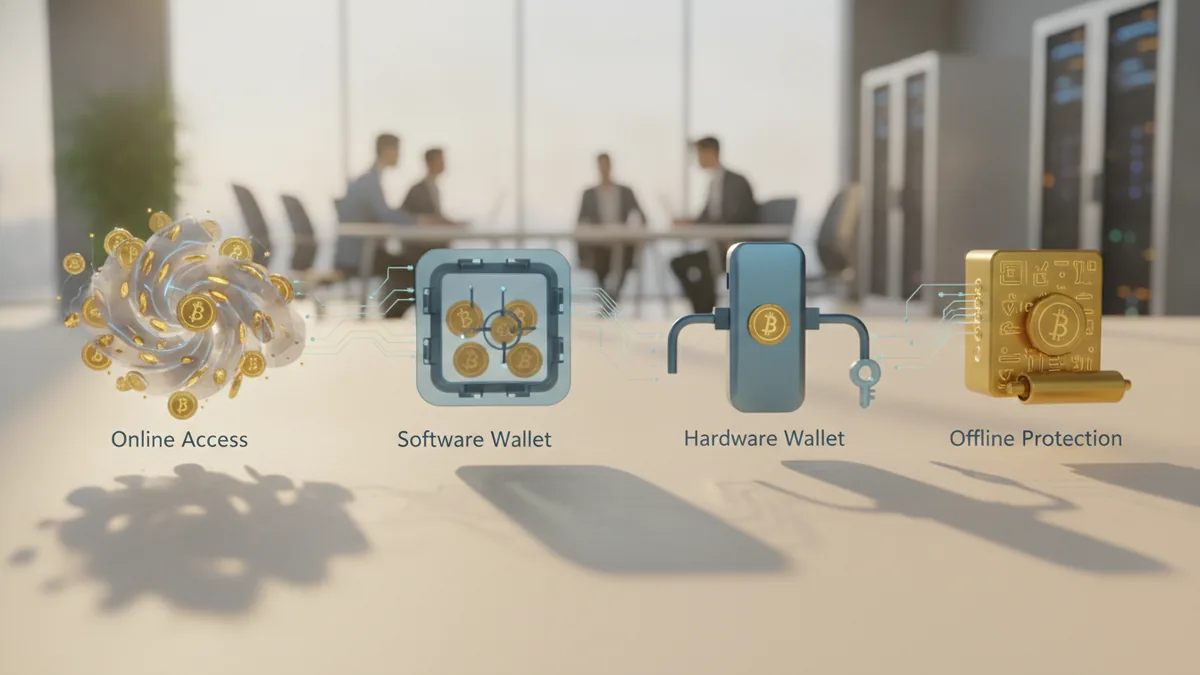
Coin-specific wallets focus on one asset or chain. They may support deeper features and faster updates. Hardware wallets keep keys offline. Hot wallets keep them ready for daily use.
| Wallet type | Main strength | Main risk |
|---|---|---|
| Custodial | Easy recovery and support | Users trust the provider |
| Non-custodial | Direct user control | Lost keys may not be restored |
| Multi-currency | One app for many assets | More chain code to maintain |
| Coin-specific | Deep support for one chain | Limited asset choice |
| Hardware | Keys stay offline | Less speed for daily payments |
Key Features of a Useful Wallet
The best crypto wallet development services make core tasks quick and plain. Users need clear balances, simple send flows, and easy receive tools. The app should show fees before approval.
A clean user experience can lower costly mistakes. Address checks should flag missing or wrong data. The send screen should show the asset, amount, network, fee, and final total.
Transaction tracking helps users understand what happens after approval. A useful record shows the payment hash, time, amount, fee, and chain. Push alerts can report pending, failed, and complete states.
Multi-factor authentication adds a second check at sign-in or withdrawal. This may use an authenticator app or a security key. Text codes alone offer weaker protection for high-risk actions.
Cold storage suits firms that hold large reserves. A wallet can keep a small working balance online. It can move larger funds only after extra checks. This split can limit losses after a breach.
- Use plain labels for balances, fees, and payment states
- Show the network before a user sends funds
- Offer address checks and a final review step
- Give users clear backup and recovery guidance
- Keep support records linked to each payment

Security Considerations for Wallets
Security must guide the wallet from its first design sketch. Encryption should protect keys in storage and data during transfer. Access rules should limit who can view or move funds.
Key handling needs special care. A team may use hardware security modules for signing keys. It should also split duties between staff, devices, and approval steps. No single user should control every high-risk action.
Audits can find flaws before launch. Ask for code review, attack tests, and a clear fix plan. Repeat these checks after major code or chain changes. Test recovery under pressure.
Teams should plan KYC, or Know Your Customer, checks where rules require them. AML, or anti-money laundering, controls can flag risky activity. The FATF recommendations give firms a trusted base for these controls.
Strong crypto wallet security features also cover staff access and recovery. Keep logs for key events and review them often. Test account recovery without exposing private keys. Remove old staff access at once.

Choosing the Right Wallet Development Service
Choosing a development partner starts with its past work. Review live products, supported chains, and security results. Ask who wrote the core code and who tests it.
A strong portfolio should match your use case. Look for custody tools, payment apps, exchange links, or multi-currency wallets. Ask how the team handles chain updates and failed payments.
Customer reviews can show how a firm acts after launch. Read comments about support speed, missed dates, and bug fixes. Request two client references when the budget is high.
Some wallets need a fiat off-ramp for cash withdrawals. Teams may search for the best crypto off ramp or the best off ramp for crypto. Compare crypto off-ramp services by fees, payout speed, country cover, and user checks.
The best crypto off-ramp providers may differ in the UK and USA. Review local rules, payout rails, and settlement times in each market. Ask how off ramp liquidity providers manage peak demand.
If the wallet sits inside a trading app, buyers may also seek the best white label trading platform. Keep that choice separate from wallet security. A branded trading tool cannot fix weak key control.
- Check chain expertise and launch history
- Review security tests and key control methods
- Test support before signing a long contract
- Compare fees for changes and future chain work
- Confirm local rules for custody and cash payouts
Top Blockchain Wallet Development Companies
There is no single list of top crypto wallet developers for every business. The right fit depends on custody, chains, markets, and scale. A small payment app needs a different team from a global exchange.
Shortlist firms with proven security practices and clear delivery plans. Look for teams that explain trade-offs in simple terms. Strong partners will name limits instead of promising every feature.
Ask each company for a sample wallet development process. It should cover discovery, design, build, testing, launch, and support. The plan should also show who owns code, keys, and system logs.
Score each firm with the same questions. This makes skill easier to compare. It also reduces the risk of choosing based on a polished sales call.
| Review area | What to ask |
|---|---|
| Security | Which tests and key controls protect the wallet? |
| Chain support | Which networks does the team maintain today? |
| Delivery | Who owns the code and handles future fixes? |
| Support | What response time applies to urgent faults? |
| Market fit | Has the team built for your users and regions? |
Future Trends in Wallet Development
Wallets are moving toward simpler control across many networks. Users want one view of assets and one clear history. Builders must hide chain detail without hiding key risks.
Passkey sign-in may reduce lost passwords and weak text codes. Better hardware links may also make safer signing easier. Recovery must still protect users from fake support staff.
Smart account tools can add spending limits and shared approval. These features may help firms manage team funds. They need clear rules and strong tests before release.
Wallets will also link more closely with payment and trading tools. That trend can improve speed and choice. It can also add new risks across custody, liquidity, and third-party access.
The best teams will treat trust as a product feature. They will show fees, risks, and payment states with care. They will ship useful tools without hiding hard choices.
Frequently asked questions
- What is the difference between custodial and non-custodial wallets?
- Custodial wallets are easier to recover, but the provider controls the keys. Non-custodial wallets give users key control, but lost backups may mean lost funds.
- How do I choose the best blockchain wallet development services?
- Look for chain skill, strong security tests, clear support terms, and similar past work. Check code ownership and future fix costs before signing.
- What features should a secure crypto wallet have?
- Core features include clear balances, fee views, address checks, payment tracking, multi-factor sign-in, and safe recovery tools.
- What should I check when choosing a crypto off-ramp?
- A fiat off-ramp lets users exchange digital assets for local currency. Compare fees, payout speed, market cover, user checks, and liquidity.
- Can a crypto wallet connect to trading and payment platforms?
- Yes. Wallets can connect with trading tools, payment rails, and cash payout services. Each link adds new risks for keys, data, and funds.
- Why do crypto wallets need KYC and AML checks?
- KYC checks help confirm who uses a service. AML controls help spot and report risky activity where local rules require them.
Related reading

Technical Due Diligence for M&A: What to Review
Learn what technical due diligence covers, how the review works, which questions to ask, and how to spot technology risks before an acquisition.

Transaction Monitoring Rules: Components and Examples
Learn how AML transaction monitoring rules work, explore common scenarios, and see how banks test, tune, and manage the cost of their programs.

FinCEN Travel Rule for Crypto: Thresholds and Duties
Learn how the FinCEN Travel Rule applies to crypto transfers, including the $3,000 threshold, required sender and recipient data, and compliance duties.